
Navi Blog
What is an eSIM & How Does it Work? Your Beginner's Guide to Digital SIMs
Discover what an eSIM is, how it works, and its key benefits for travelers. Learn how to install an eSIM and why this digital SIM technology is perfect for your next trip abroad.
What is an eSIM & How Does it Work? Your Beginner's Guide to Digital SIMs
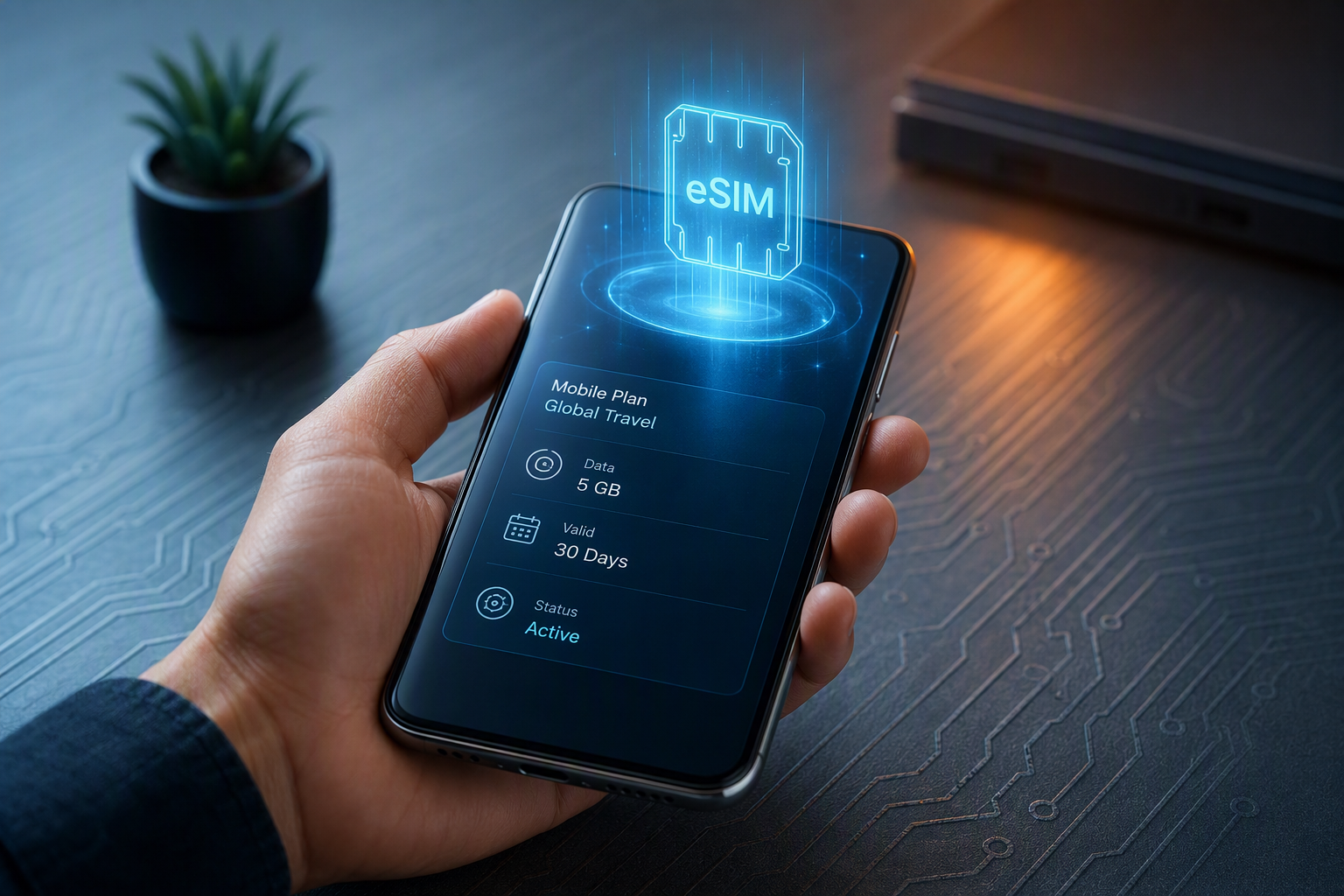
Are you tired of hunting for local SIM cards, dealing with expensive roaming fees, or fumbling with tiny plastic chips every time you travel internationally? If so, you're not alone. Staying connected abroad has historically been a hassle, but a revolutionary technology is rapidly changing the game: the eSIM. This digital SIM is quickly becoming the preferred choice for savvy travelers, digital nomads, and anyone who needs reliable, affordable mobile data on the go.
In this comprehensive guide, we'll demystify what an eSIM is, breaking down how it works in simple terms. We’ll explore the undeniable benefits that make travelers switch to this innovative solution and provide a practical overview of how to install an eSIM and get connected. By the end, you'll understand why embracing eSIM technology is the smartest move for seamless global connectivity in 2026 and beyond. Get ready to transform your travel experience.
Beyond the Physical SIM: Understanding eSIM Technology
For decades, mobile connectivity relied on the humble physical SIM card – a small, removable plastic chip inserted into your phone to identify you to a mobile network. While effective, this system had its drawbacks, especially for frequent travelers. The advent of eSIM technology marks a significant leap forward, essentially digitizing the SIM card and embedding it directly into your device. The "e" stands for "embedded," meaning it's a small chip soldered into your phone, tablet, or smartwatch during manufacturing.
Unlike its physical predecessor, an eSIM is reprogrammable. Instead of swapping out physical cards, you can digitally download and store multiple carrier profiles on a single eSIM. This eliminates the need for ejector tools, physical stores, and the constant worry of losing a tiny, crucial piece of hardware. It's a more streamlined, flexible, and convenient way to manage your mobile connectivity.
What is an eSIM (Embedded SIM)?
An eSIM is a global standard for digital SIMs that allows you to activate a cellular plan from a carrier without needing a physical nano-SIM card. Think of it like this: your phone already has a built-in, unchangeable identity chip. An eSIM takes that concept further by allowing various network profiles (your phone number, data plan, network access info) to be stored and managed directly on this embedded chip. When you switch providers or travel to a new country, you simply download a new profile, rather than inserting a new card.
The Evolution from Plastic to Digital
The transition from physical SIMs to eSIMs reflects a broader trend towards digital convenience and integration in technology. Early mobile phones used large SIM cards, which gradually shrunk to mini, micro, and finally nano-SIMs. The eSIM is the logical next step, removing the physical card entirely. This evolution not only frees up valuable internal space in devices, allowing for larger batteries or more sophisticated components, but it also simplifies logistics for both consumers and mobile network operators. For travelers, it means saying goodbye to searching for local SIM card shops upon arrival and hello to instant connectivity.
The Mechanics: How eSIM Profiles are Downloaded and Activated
Understanding how to use and activate an eSIM might seem complex at first, but the process is surprisingly straightforward and user-friendly. The magic happens through software, allowing your phone to communicate with network providers and securely download your chosen cellular plan directly onto the embedded chip. This digital activation is a core advantage of eSIM technology, especially for those who need quick and efficient setup for a prepaid eSIM for tourists.
When you purchase an eSIM plan, you're not receiving a physical product, but rather a digital profile. This profile contains all the necessary information to connect your device to a specific mobile network. Most commonly, this is delivered via a QR code, which your phone's camera can scan to initiate the setup. Alternatively, some providers offer manual entry options or direct app-based activation for even greater convenience.
Step-by-Step Activation
Activating an eSIM typically follows these simple steps:
- Purchase an eSIM Plan: Visit a reputable eSIM provider or a comparison platform like Navi. You'll choose a plan based on your destination (e.g., eSIM for Japan, Thailand & Dubai: Ultimate Guide for 2026 Travelers), data needs, and duration.
- Receive Your Activation Information: After purchase, you'll usually get an email containing a QR code, or an activation code to enter manually.
- Scan the QR Code (or Manual Entry):
- iOS: Go to Settings > Cellular (or Mobile Data) > Add eSIM. Choose "Use QR Code" and scan the code. Follow the on-screen prompts.
- Android: Go to Settings > Network & internet > SIMs > Add eSIM (or Mobile Network > Advanced > Carrier > Add Carrier). Scan the QR code.
- Label Your eSIM: Your phone will prompt you to give your new eSIM a clear label (e.g., "Travel Europe," "USA Data"). This is helpful if you plan to store multiple eSIM profiles.
- Set as Primary Data Line (if applicable): If you have both a physical SIM and an eSIM, you'll decide which one to use for mobile data, calls, and texts. For travel, you'll likely set the eSIM as your primary data line.
- Activate Data Roaming (if needed): Depending on your plan, you might need to ensure data roaming is enabled for your eSIM profile in your phone's settings.
That's it! Your digital SIM is now ready to connect you to the local network. This streamlined process is a major part of the appeal for modern travelers looking to avoid connectivity headaches.
Compatibility Check
Before you buy an eSIM, it's crucial to confirm that your device is eSIM-compatible. Most newer smartphones released in the last few years (generally iPhone XS/XR onwards, Samsung Galaxy S20 onwards, Google Pixel 3 onwards) support eSIM technology. However, specific models and regions can vary. Always check your phone's specifications or consult your device manufacturer's website. If you're unsure, a quick online search for "[Your Phone Model] eSIM compatibility" should provide a definitive answer. Without a compatible device, you won't be able to utilize this convenient digital SIM technology.
Why Travelers Are Switching to eSIMs: Benefits & Advantages
The shift towards eSIM technology is not just about novelty; it's driven by tangible benefits that significantly enhance the travel experience. For international travelers, digital nomads, and business professionals alike, eSIMs offer unparalleled convenience, flexibility, and cost-effectiveness. These advantages are why more and more people are asking "what is an eSIM" and quickly adopting it as their go-to connectivity solution abroad.
One of the most compelling reasons travelers are flocking to eSIMs is the sheer ease of managing multiple connections. Imagine landing in Tokyo, switching off airplane mode, and instantly having a local data plan without touching your phone's SIM tray. This seamless experience is transformative, eliminating many of the traditional stresses associated with international travel.
Convenience & Flexibility
- Instant Activation: No more searching for local stores or dealing with language barriers to buy a physical SIM. Activate your plan digitally, often before you even land.
- Multiple Profiles: Store several eSIM profiles on a single device. This means you can keep your home number active (for calls/texts) while using an eSIM for data in your travel destination. You can easily switch between plans with a few taps in your phone settings. This is particularly useful for multi-country trips, letting you have a dedicated plan for each leg of your journey, such as during The Best eSIM for USA & Europe Travel: Stay Connected Anywhere in 2026.
- No Physical Swapping: Say goodbye to tiny SIM cards, ejector tools, and the risk of losing your home SIM. Everything is managed digitally.
- Easy Top-Ups and Plan Changes: Many eSIM providers allow you to easily extend your plan or purchase more data directly through their app or website, offering greater control over your spending and connectivity needs.
Cost Savings & Local Rates
- Avoid Roaming Fees: One of the biggest drains on a traveler's budget is exorbitant international roaming charges. eSIMs allow you to bypass these by purchasing local or regional data plans at much lower rates than your home carrier's roaming options.
- Competitive Pricing: The eSIM market is competitive, with numerous providers offering a wide range of plans tailored to different needs and budgets. This competition often translates to better deals for consumers, especially when comparing providers like those found in an Airalo vs Holafly vs Nomad vs Maya Mobile: Which eSIM is Best for You? analysis.
- Transparent Costs: With prepaid eSIM for tourists, you know exactly what you're paying for upfront, with no hidden fees or unexpected charges, giving you peace of mind.
Enhanced Security & Reliability
- Reduced Risk of Loss/Theft: Since there's no physical card, there's nothing to lose or for thieves to easily remove from your phone. If your phone is stolen, the eSIM profile remains securely linked to your device.
- Dedicated Data Connection: When you use a local eSIM plan, you're often getting a direct connection to a local network, which can sometimes offer more stable and faster speeds than relying on your home carrier's roaming partners. This is crucial for digital nomads or business travelers who need consistent connectivity.
The collective benefits of convenience, cost savings, and enhanced security make the eSIM an undeniable upgrade for anyone looking to simplify their travel connectivity.
Getting Started with eSIMs: A Practical Guide for Tourists
Now that you understand what an eSIM is and how it functions, let's look at the practical steps to getting started, especially as a tourist. The market for eSIM plans is booming, offering a wide array of options for various destinations and data needs. The key is knowing how to navigate these choices to find the perfect plan for your adventure.
Choosing the right eSIM involves considering your travel itinerary, data consumption habits, and budget. Whether you're embarking on a short city break or an extended multi-country tour, there's an eSIM solution tailored for you. The convenience of a digital SIM means you can have your connectivity sorted before you even pack your bags.
Choosing the Right eSIM Plan
- Destination-Specific vs. Regional/Global Plans: Are you visiting a single country like Japan or Thailand, or embarking on a grand tour of Europe? Destination-specific eSIMs often offer the best local rates, while regional plans (e.g., Europe-wide) provide seamless coverage across multiple countries, albeit sometimes at a slightly higher per-country cost. Global eSIMs are available but usually less cost-effective for single-trip use.
- Data Volume & Duration: Assess your data needs. Do you mostly use Wi-Fi, or are you a heavy streamer and navigator? Plans vary from small data bundles (1GB, 3GB) to unlimited data options. Match the plan duration to your trip length (e.g., 7 days, 15 days, 30 days).
- Provider Reputation & Support: While many providers offer competitive rates, consider their customer support and reviews. Reliable support can be invaluable if you encounter any activation or connectivity issues abroad.
- Navi's Comparison Tool: To simplify this process, use a dedicated comparison platform like Navi (getnavi.co). We help you compare different eSIM providers, plans, and prices side-by-side for popular destinations, ensuring you find the best deal. Find Your Perfect Travel eSIM: Navi's Ultimate Comparison Tool for 2026 can help you quickly sort through options from Airalo, Holafly, Nomad, and Maya Mobile.
Installation & Management Tips
- Activate Before You Travel (or upon arrival): For maximum peace of mind, activate your eSIM before you leave. This allows you to troubleshoot any issues while still at home with Wi-Fi access. Alternatively, activate it as soon as you land using airport Wi-Fi.
- Keep Your Home SIM Active (if Dual SIM): If your phone supports dual SIM (physical + eSIM), you can keep your home SIM active for calls and texts, using your eSIM purely for data. This is great for receiving verification codes or important calls. Remember to set your eSIM as the primary for mobile data.
- Monitor Data Usage: Most eSIM apps or your phone settings will allow you to monitor your data consumption. Keep an eye on it to avoid running out unexpectedly, and top-up if necessary.
- Understand Data Roaming Settings: Even with an eSIM, sometimes specific settings (like data roaming within your phone's eSIM profile) need to be enabled for it to function correctly. Always double-check your provider's instructions.
- Multiple eSIMs: If you travel frequently or to multiple regions, you can store several eSIM profiles on your device and switch between them as needed. Just ensure you label them clearly to avoid confusion.
By following these practical tips, you can confidently integrate eSIM technology into your travel routine, ensuring you stay connected effortlessly wherever your adventures take you.
Frequently Asked Questions About eSIMs
Q: Do I need a physical SIM card anymore if I use an eSIM?
A: No, with an eSIM, you don't need a physical SIM card for your mobile data connection. The eSIM chip is embedded in your device, and your network profile is downloaded digitally. Many modern phones support both a physical SIM and an eSIM simultaneously, offering dual SIM functionality.
Q: Can I use my regular phone number with an eSIM?
A: Yes, if your phone supports dual SIM functionality (one physical SIM, one eSIM), you can keep your home phone number active on your physical SIM for calls and texts while using a travel eSIM for mobile data abroad. This allows you to receive calls and messages on your primary number without incurring roaming data charges.
Q: Is my phone compatible with eSIM technology?
A: Most newer smartphones released from 2018 onwards (e.g., iPhone XS/XR/11/12/13/14/15 series, Samsung Galaxy S20/S21/S22/S23/S24 series, Google Pixel 3/4/5/6/7/8 series) support eSIM. However, compatibility can vary by region and specific model. Always check your device's specifications or manufacturer's website to confirm.
Q: Can I install multiple eSIM profiles on my phone?
A: Yes, most eSIM-compatible devices allow you to store multiple eSIM profiles (typically 5-10, depending on the device). While you can only use one eSIM for data at a time, you can easily switch between them in your phone's settings without having to redownload profiles.
Q: What if I run out of data on my eSIM plan?
A: If you run out of data, most eSIM providers offer easy top-up options directly through their app or website. You can purchase additional data bundles to extend your plan or simply buy a new eSIM plan if it's more cost-effective.
Conclusion
The evolution of the eSIM marks a pivotal moment in how we approach mobile connectivity, particularly for travel. Gone are the days of frustrating physical SIM swaps, exorbitant roaming fees, and the anxiety of staying offline in a foreign land. This digital SIM technology, with its embedded, reprogrammable nature, offers a seamless, flexible, and cost-effective solution for staying connected wherever your adventures take you.
From instant activation and the ability to store multiple profiles to significant cost savings on data, the benefits of embracing eSIMs are clear. For any traveler looking to simplify their journey and ensure reliable mobile data, understanding what an eSIM is and how it works is no longer optional – it's essential. By choosing a prepaid eSIM for tourists, you gain peace of mind and the freedom to explore without connectivity worries.
Ready to experience the future of travel connectivity? Let Navi guide you. Our platform makes it easy to compare and choose the perfect eSIM plan for your next destination, from Japan to the USA, Europe, and beyond. Say goodbye to connectivity hassles and hello to truly global freedom.